

Understanding Stated Supports in your NDIS Plan
In your NDIS plan, supports can be either flexible (like most of your core funding) or stated. Understanding the difference can help you make the most of your funding and avoid issues with claims.
What are stated supports?
Stated supports are supports that must be used exactly as they are described in your NDIS plan.
This may include:
- A specific type of support or service
- A set number of hours or sessions
- A specific provider
- A requirement for a particular type of professional (for example, a psychologist or occupational therapist)
Most Capacity Building and Capital supports are stated, particularly when your plan lists specific services or providers.
Why does this matter?
Plan managers are required to process claims that are in line with your plan, this includes claiming for stated supports as they are described.
This is important because claims outside of stated supports may be rejected by the National Disability Insurance Agency (NDIA) or result in further compliance action like debt recovery.
How do I know if a support is included?
Before starting a service, review the plan and ask yourself:
- Do I have funding in the correct category?
- Is the funding stated?
- If it is a stated support, does it match what is written?
- Are there any requirements, such as a specific provider, qualifications, or number of hours?
If you’re unsure, you can also seek advice from your NDIS planner or support coordinator.
Budget and Funding Periods
Even when a support is included in your plan, you still need to ensure:
- There is enough funding available in the relevant budget.
- The support is being claimed during the correct funding period (if your plan includes funding periods).
- The support is delivered within the limits of any stated hours or allocations in your plan.
Being funded for a support does not always mean there is funding available to use.
Levels of Detail in Stated Funding
Not all stated supports are described in the same way.
Some plans provide very specific information about what can be purchased, while others are more general and allow some flexibility within the funding category. The amount of detail included in your plan will determine how much choice and flexibility you have when using your funding.
Example 1: Highly Specific Funding
The example below is from an NDIS plan under the Behaviour Support category.
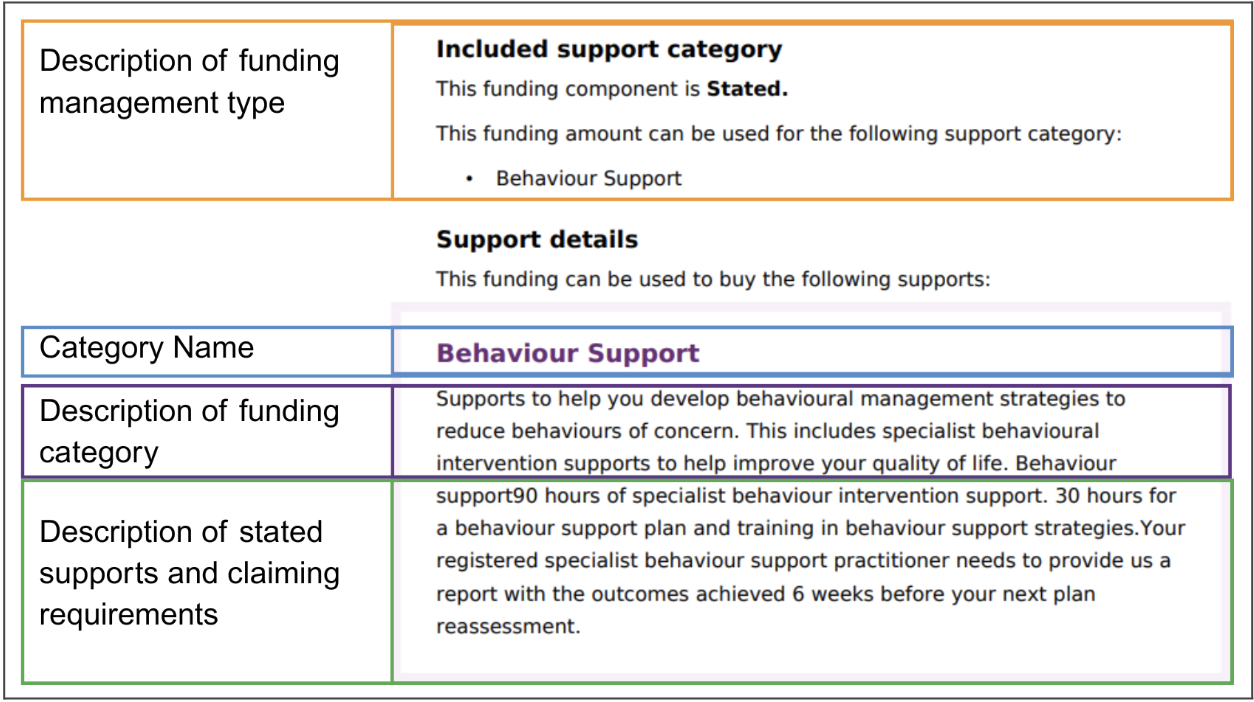
This budget includes:
- 90 hours of Specialist Behaviour Intervention Support
- 30 hours of Behaviour Support Plan and Training
These supports must be claimed in line with:
- The number of hours allocated
- The type of support described in the plan
- Any provider or qualification requirements
Only the supports specifically listed in the plan can be claimed from this funding.
Example 2 – More Flexible Funding
The example below is from an NDIS plan under Improved Daily Living Skills.
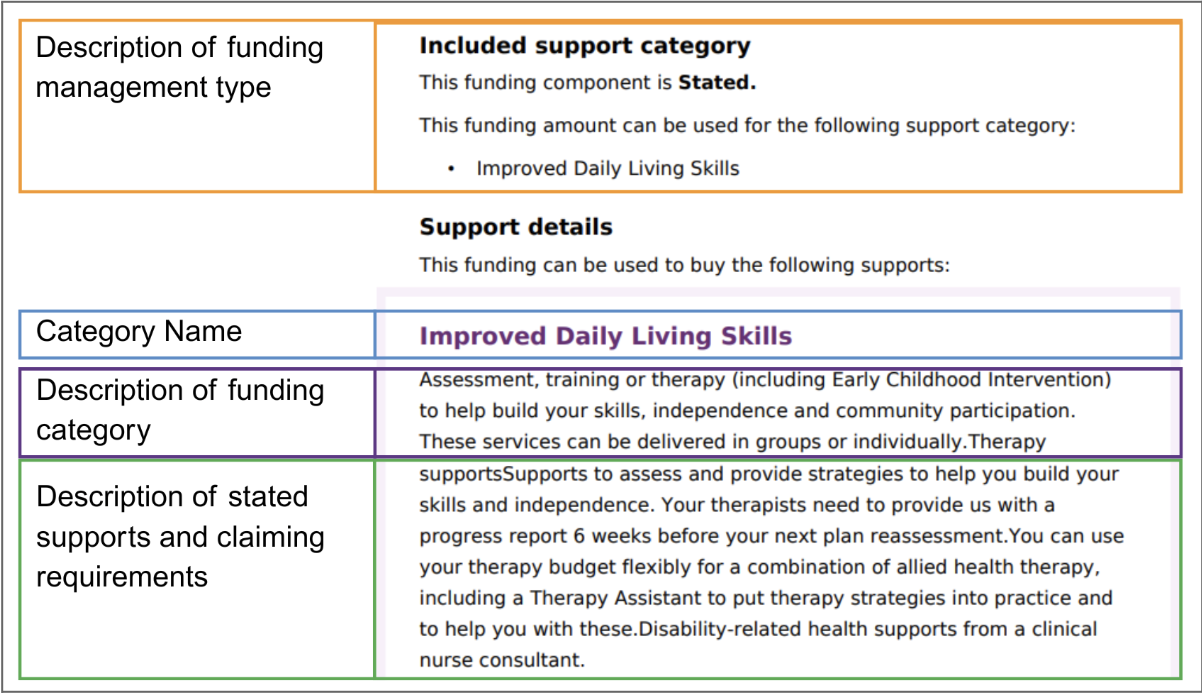
This funding provides a more general description of the supports that can be claimed. This allows you more flexibility to choose from a range of NDIS-approved therapy supports that best meet your needs.
While there is more flexibility, claims still need to:
- Fit within the purpose of the funding category
- Meet NDIS requirements
- Stay within your available budget
- Be delivered by an appropriate provider with qualifications (if applicable)
Understanding Your Plan
Taking the time to read the information included in your NDIS plan, particularly the wording used in your funding categories, is one of the best ways to understand how your funding can be used.
The level of detail provided in a funding category can make a big difference. Some categories are very specific and can only be used for certain supports, while others provide more flexibility and allow you greater choice in the services you access.
Understanding whether your funding is flexible or stated, and paying attention to any conditions or requirements in your plan, can help you make informed decisions, avoid issues with claims, and ensure your funding is used in line with NDIS requirements.


