
Changes to NDIS plans - Funding Periods
In October 2024 new legislation was put into place for the NDIS and included a number of different changes to how funding can be used and managed. Many of these changes were implemented immediately and most participants and service providers are now aware of the impact of the legislation.
However some of the changes were not able to be started immediately as the NDIA needed time to put their own systems in place to manage this. One example of this is Funding periods.
The legislation stated that funding periods would be introduced to allow the NDIA to change and monitor how often a participant can access part of their funding. This is documented in Section 33 of the new legislation however the NDIS online platform called PACE did not have the tools needed to be able to do this straight away.
From mid May 2025, a new update to PACE has been released to allow the NDIA to introduce these changes. It is now possible for the NDIA to create longer plans and use a system where the funding is released in blocks of time which are called ‘Funding Periods.’
Participants can only access the funding period once the timeframe has been reached.
For participants with plans created before 19th of May 2025, this process will not impact your plan until a new plan is created (via a plan review/reassessment).
If you have a new plan created from mid May, your plan will be broken down into three parts:
- Your total funding amount: this is the total amount that has been approved for the whole plan duration.
- Your funding components: these are the categories of your plan, such as Core Supports, Capacity Building and Capital funding.
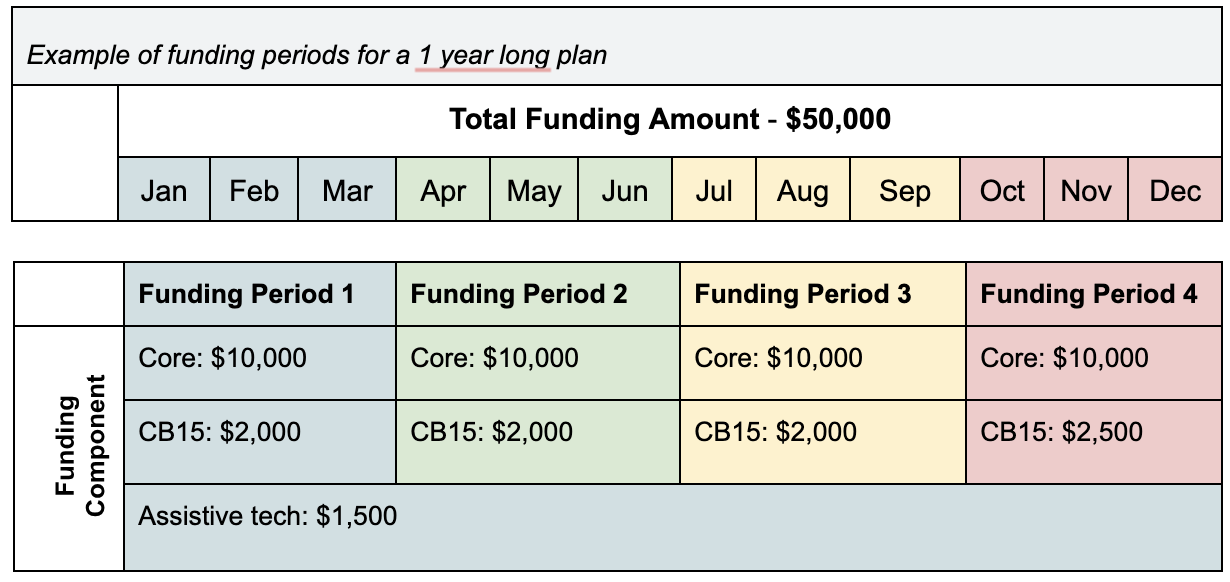
- Funding periods: this is the breakdown of how much funding can be used based on a period of time.

How do Funding Periods work?
Each different funding component will have its own funding period. They may be the same for all categories or it could be different. Funds that are not used can be rolled over into the next period. If the plan ends, no funding can be rolled over and a new total funding amount will be provided.
In the example below, the participant has four main funding periods of three months each in duration. The participant can only use the amount listed in each funding component (or category).
In some cases it may be possible to claim from a future funding period, however this has rules and will impact your future funding available.
What to do if your funding is running low
It is not guaranteed that additional funding will be provided if an overspend occurs. Following the changes to the NDIS legislation additional funding can only be added to a participant plan in the following situations:
- If you have experienced financial exploitation or someone has fraudulently accessed your funding.
- If the overpayment occurred to prevent a likely threat to your life, health or safety.
- If you have not been able to request a review because of your disability or there was no support for you to make a decision making
- If there has been a crisis or emergency that changed your support needs.
You may be required to provide evidence to explain your overspend and it is possible that the NDIS will not cover the cost. In this instance, you will be responsible for the amount owing to your service providers
Where can I go for more information?
The following links can be used to learn more about these changes and Section 33
- A message from the CEO about supporting you to manage your NDIS funding
- Changes to NDIS funding periods